

A New Healthcare Transaction Paradigm
The average hospital loses $1.75 million a year to so-called Bill-Only transactions. This is because about 50% of an average hospital’s supply chain expenditures are paid after the product has been used. These healthcare products are typically provided by sales reps that walk the devices into the hospitals for special procedures like joint replacements, pacemakers, or other implants.
The fact that the devices are paid for after the device has been used creates problems, both for the hospital and for the manufacturer of the device. The process of billing, reconciling, and paying for these devices after use is called a “Bill-Only” transaction.
Bill-Only processes are financially wasteful, time consuming and aggravating. And they result in lack of transparency and control for hospital staff and leaders. This is not just a problem for the hospital. The supplier of the medical devices suffers the hardship of the reconciliation process as well, causing all sorts of aggravation for staff – and they have to wait longer to get paid, simply because the process takes so long.
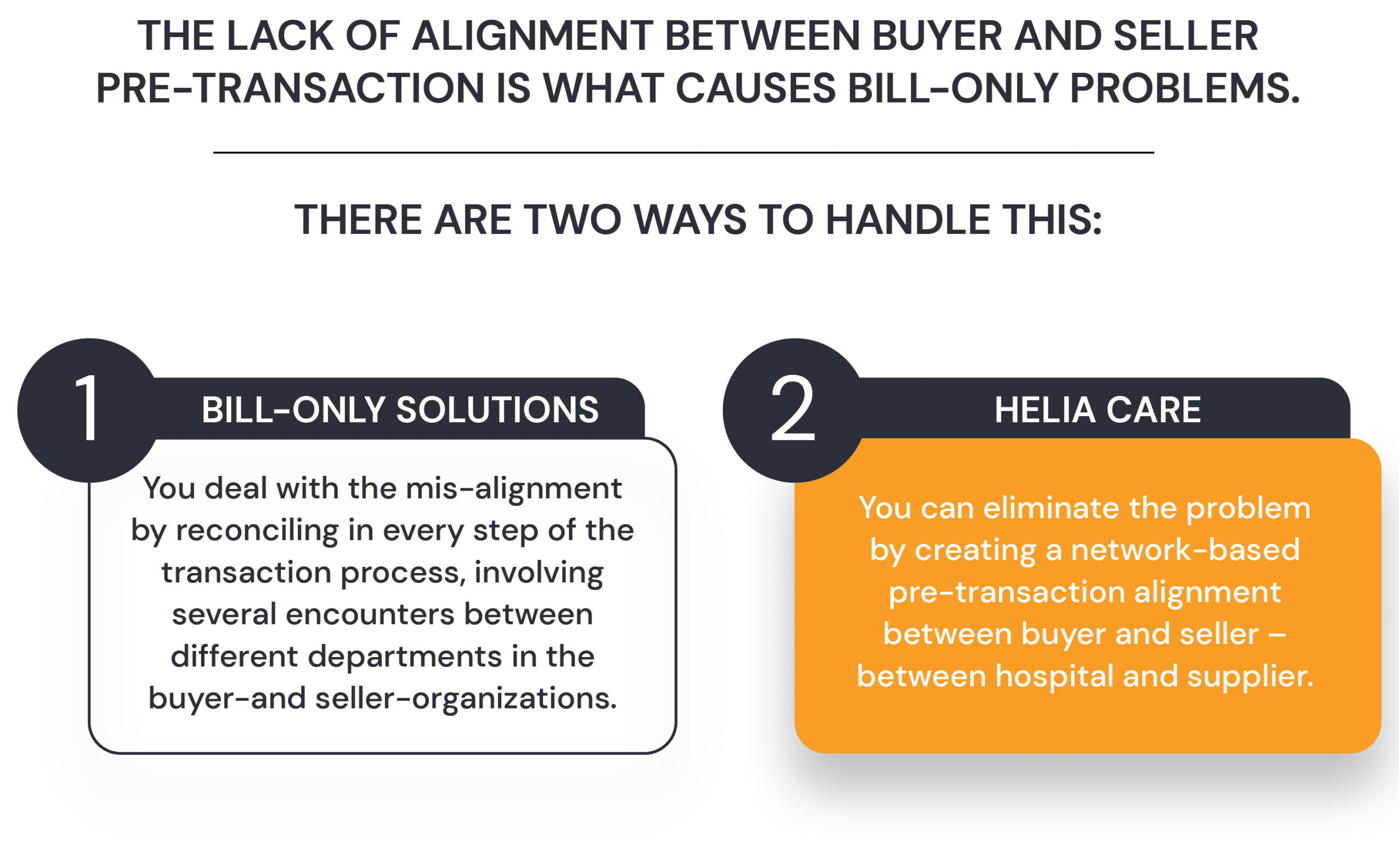
Current “bill-only” services don’t fix the problem. They treat the symptoms, and they do so very inefficiently. Helia Care is different from the Bill-Only solutions providers. We have approached the problem differently:
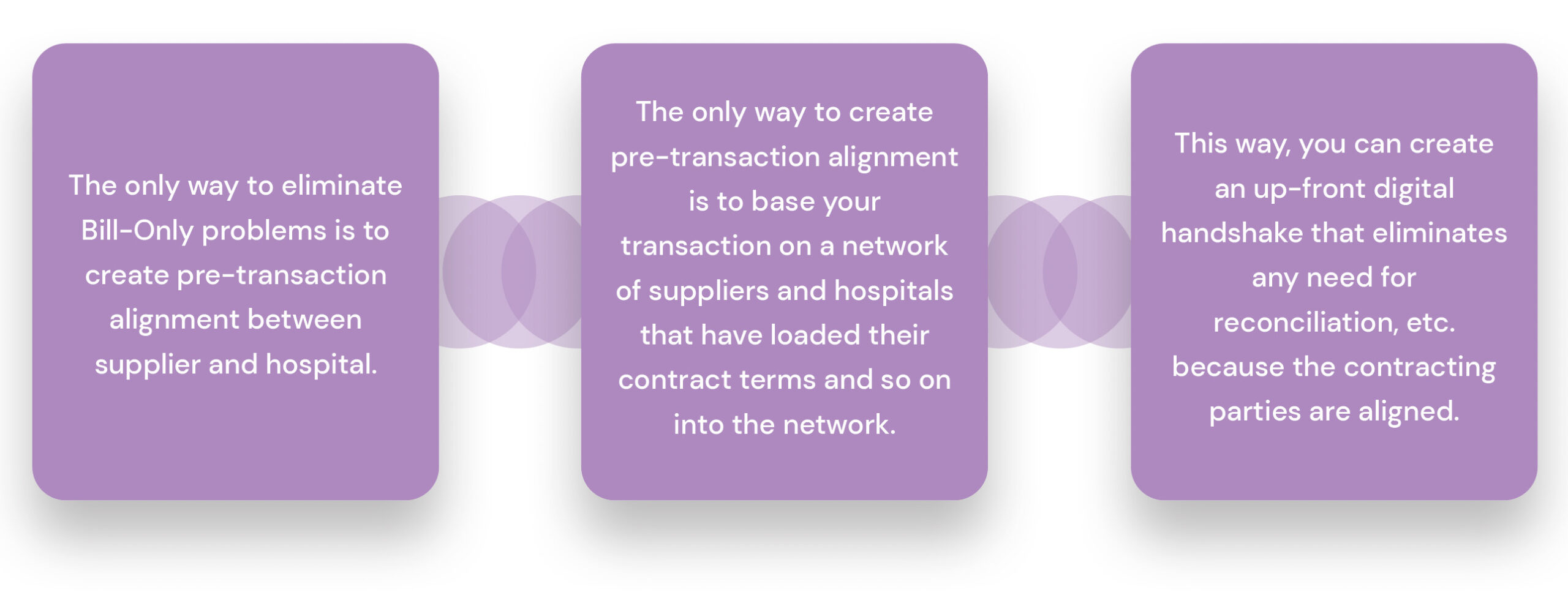

The network-based, up-front digital handshake is used in hospitals and hospital systems across the country, eliminating unnecessary costs, resulting in hospital revenue re-capture, creating seamless communication processes and resulting in faster payments for the supplier.
For hospitals that integrate the Helia Care solution with their ERP system, a Helia Care transaction truly becomes a one-click solution – like buying new batteries on Amazon.
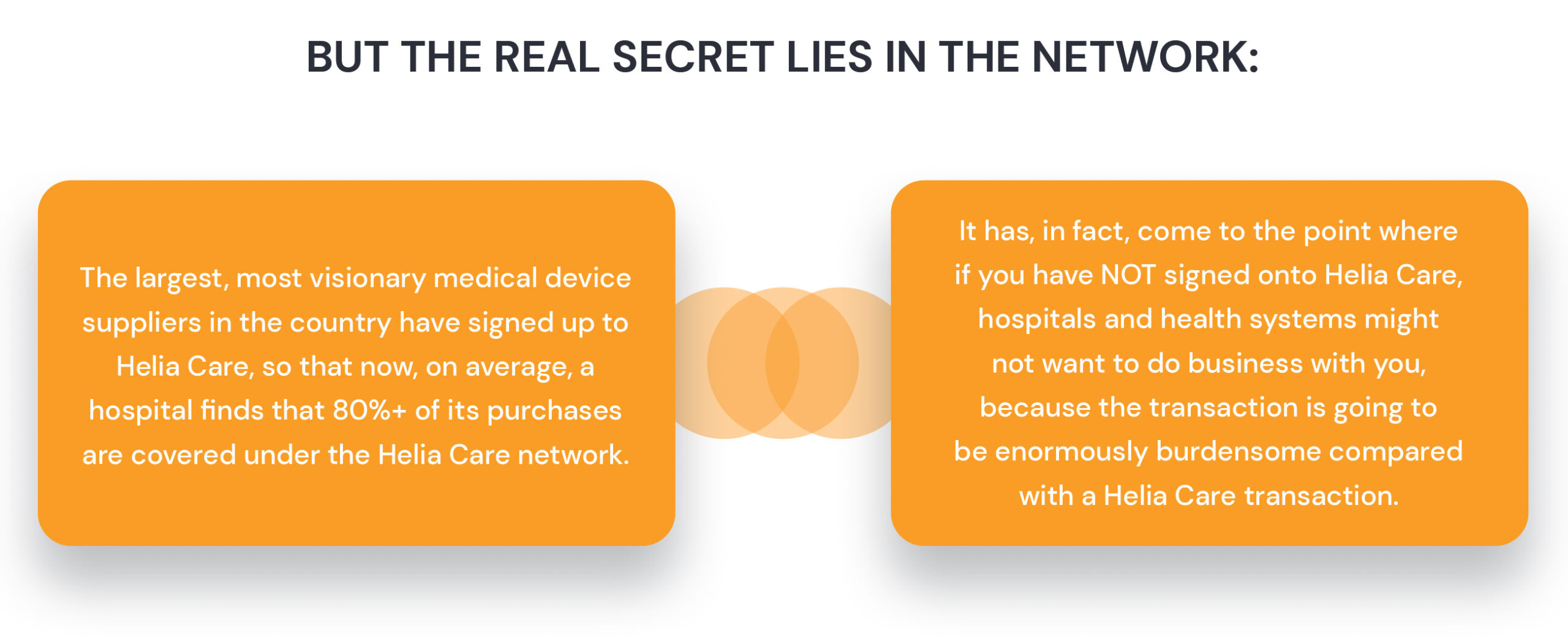
Helia Care is categorically different. We do not patch up the Bill-Only process. We have replaced the Bill-Only process with a new, seamless, two-sided transaction paradigm, solving problems for hospitals as well as suppliers.