

The Bill-Only Problem
Healthcare in America costs far too much. This is because a lot of routine practices in healthcare are simply inefficient. This means that we all pay more than we need to, but what is worse, it means that instead of focusing on what’s important – the patient – we are focusing on fixing unnecessary problems.
One challenging area is how hospitals pay for their supplies: Hospitals buy capital equipment from large distributors and pay for the equipment when the order is placed. Likewise, they buy healthcare commodities like masks and syringes from other distributors – and pay for these when the order is placed. However, about 50% of an average hospital’s supply chain expenditures are paid after the product has been used. These healthcare products are typically provided by sales reps that walk the devices into the hospitals for special procedures like joint replacements, pacemakers, or other implants. These are “bill-only” purchases.
The fact that the devices are paid for after the device has been used creates problems, both for the hospital and for the manufacturer of the device. The process of billing, reconciling, and paying for these devices after use is called a “Bill-Only” transaction.

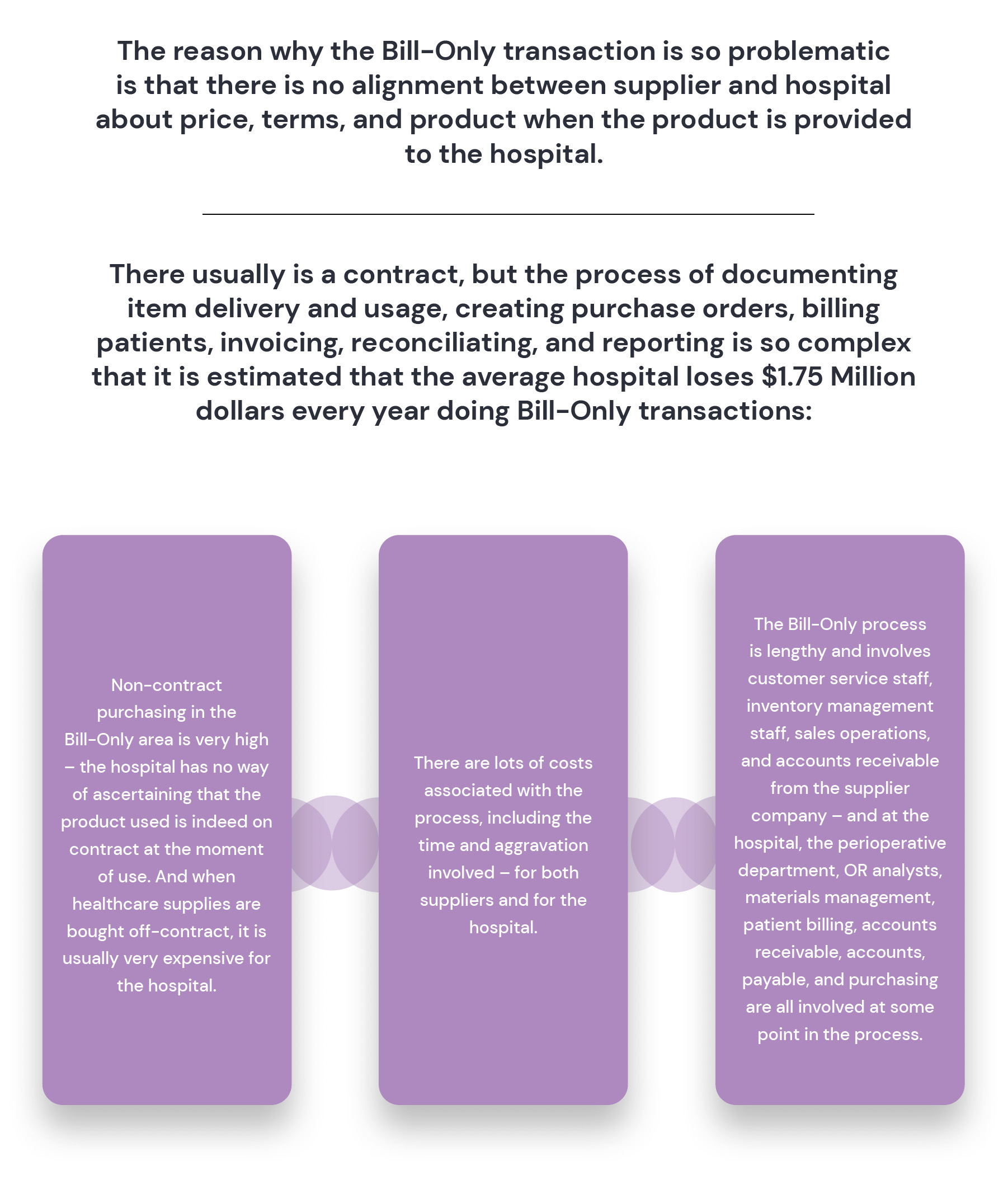
The supplier of the medical devices suffers the hardship of the reconciliation process as well, causing aggravation for staff – and suppliers have to wait longer to get paid, simply because the process takes so long.
There are companies that provide so-called Bill-Only services. This usually means that the company finds the problem, figures out what the problem is all about, then try to find a solution. While they start the process by looking at data from the supplier, they use data from the hospital as the source of truth, which makes the solutions very one-sided. Bill-only services don’t fix the problem. They treat the symptoms, and they do so very inefficiently.

It makes sense that the sales rep provides devices that fit the individual patient at the last moment. But why does this have to result in losses on both sides? Helia Care has developed a solution to the Bill-Only problem that fixes it upfront with a single click, similar to purchasing batteries on Amazon.
We owe it to our patients that it is them, we focus on, not drawn-out reconciliation processes costing lots of staff hours.