

The Power of Network
About 50% of an average hospital’s supply chain expenditures are paid after the product has been used. These healthcare products are typically provided by sales reps that walk the devices into the hospitals for special procedures like joint replacements, pacemakers, or other implants.
The fact that the devices are paid for after the device has been used creates problems, both for the hospital and for the manufacturer of the device. The process of billing, reconciling, and paying for these devices after use is called a “Bill-Only” transaction.
The reason why the Bill-Only transaction is so problematic is that there is no alignment between supplier and hospital about price, terms, and product when the product is provided to the hospital. There usually is a contract, but the process of documenting item delivery and usage, creating purchase orders, billing patients, invoicing, reconciliating, and reporting is so complex that it is estimated that the average hospital loses $1.75 Million dollars every year doing these Bill-Only transactions.
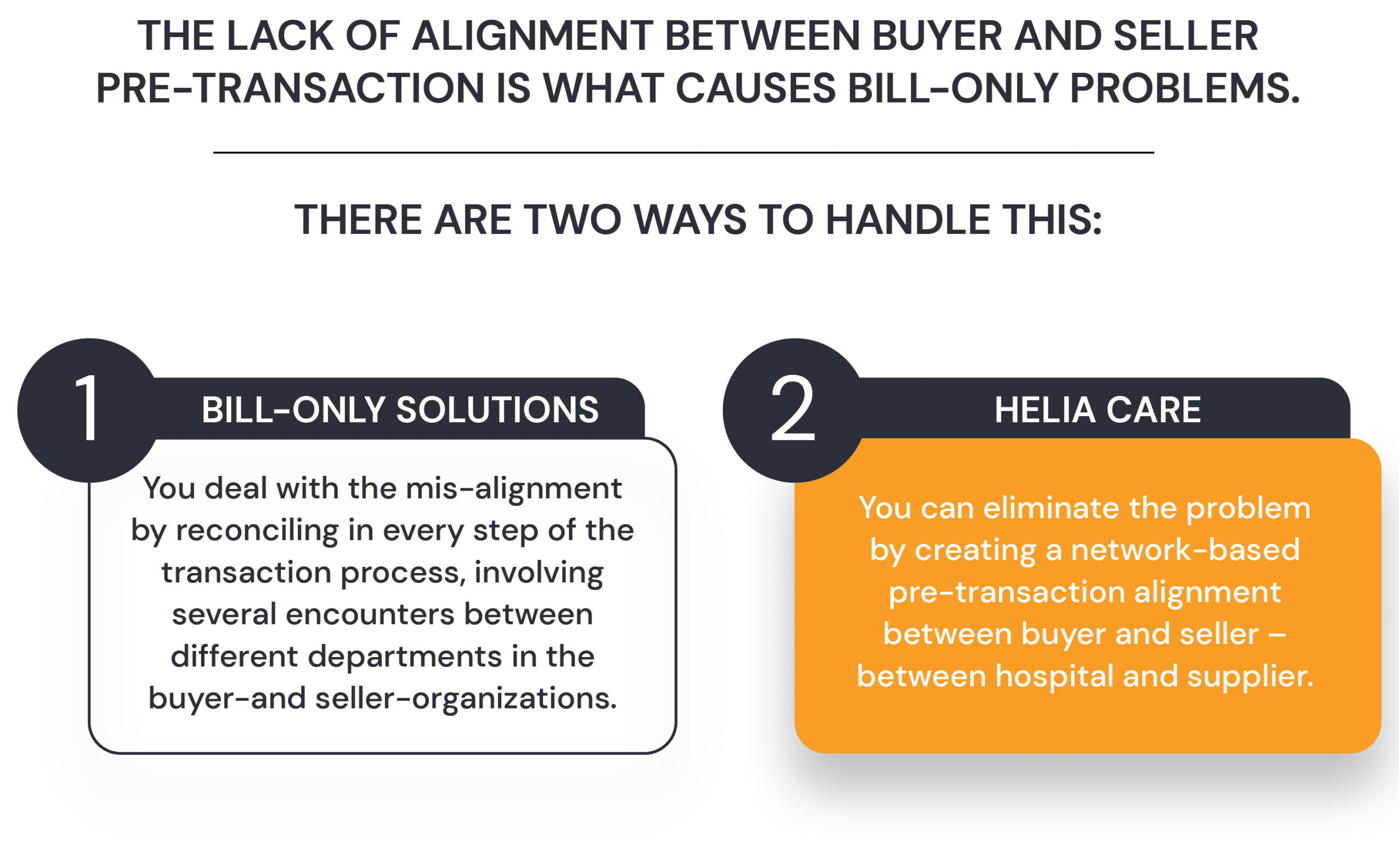
This is the difference between treating the symptoms and treating the problem. Until this point, healthcare has only been treating the symptoms with semi-automated bill-only solutions that perpetuate the problem rather than stopping it from happening in the first place.
The only way to really solve the bill-only problem is to create pre-transaction alignment between supplier and hospital. The only way to create this alignment, is by creating a very large network of suppliers and hospitals where contract terms, products, pricing and so on are loaded into the network.
With a network of suppliers and hospitals, terms, conditions, and prices, block-chain-like technology can align these between hospital and provider and create a single-source of truth that guides every step of the transaction. This technology acts as a network-based digital handshake that eliminates the need for reconciliation, phone calls, delays, etc. It is like buying AAA batteries at Amazon.
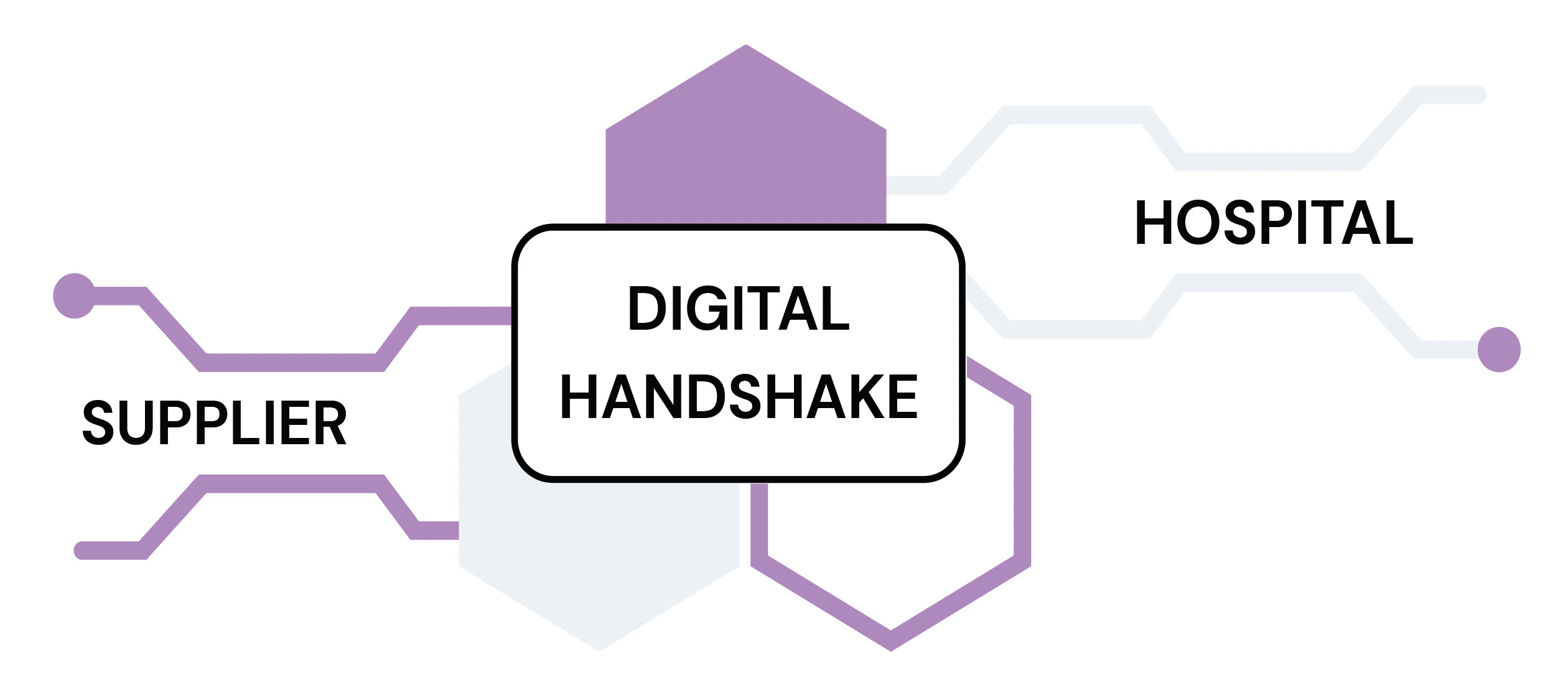

Helia Care has spent the last years building this network. Large, visionary medical device suppliers have eagerly signed up to Helia Care, so that now, on average, a hospital finds that 80%+ of its purchases are covered under the Helia Care network.
If you have NOT signed onto Helia Care, hospitals and health systems might not want to do business with you, because the transaction is going to be enormously burdensome compared with a Helia Care transaction.
An upfront digital handshake that ensures contractual alignment between supplier and hospital buyer may sound too good to be true. But Helia Care works in leading health systems throughout North America. The network is what makes it work. And when Helia Care is integrated into the hospital’s ERP system, it becomes a one-click solution. Just like buying AAA batteries on Amazon.
So now, healthcare can focus on what’s most important: The patient.